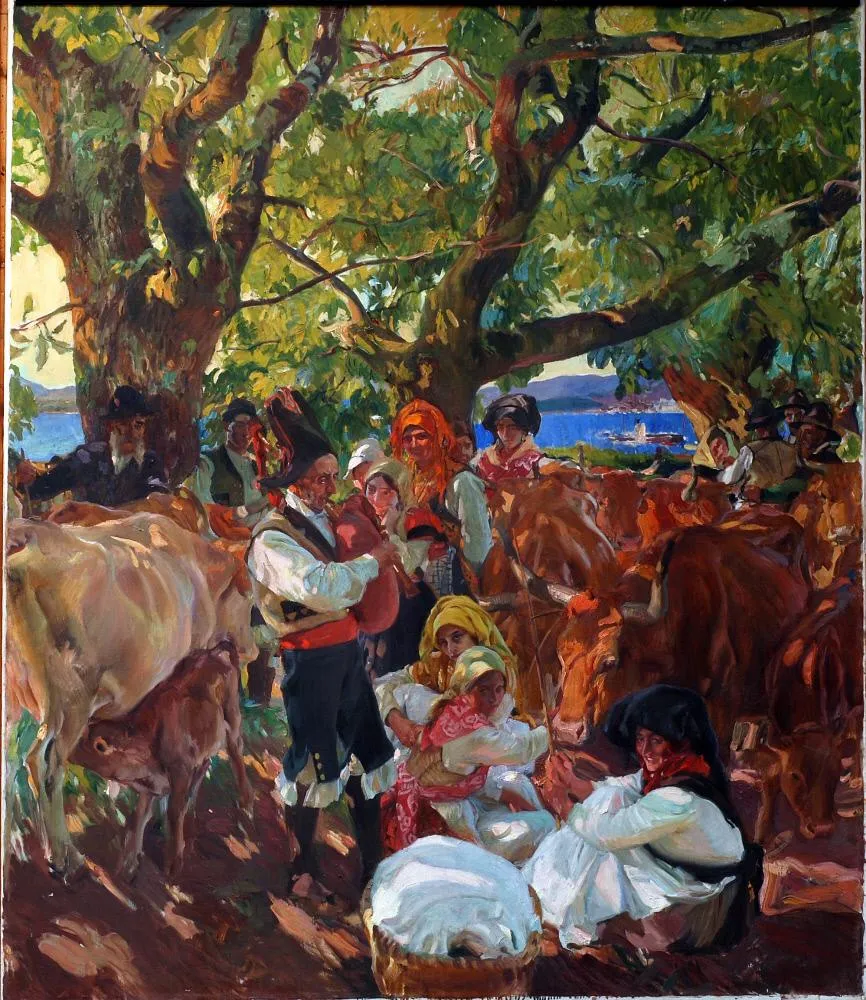
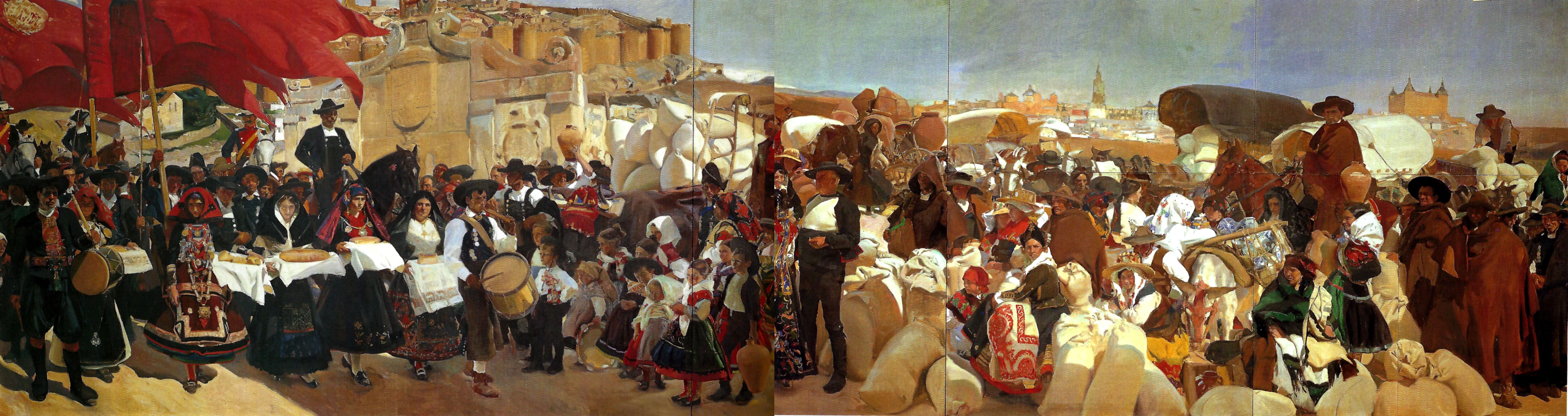
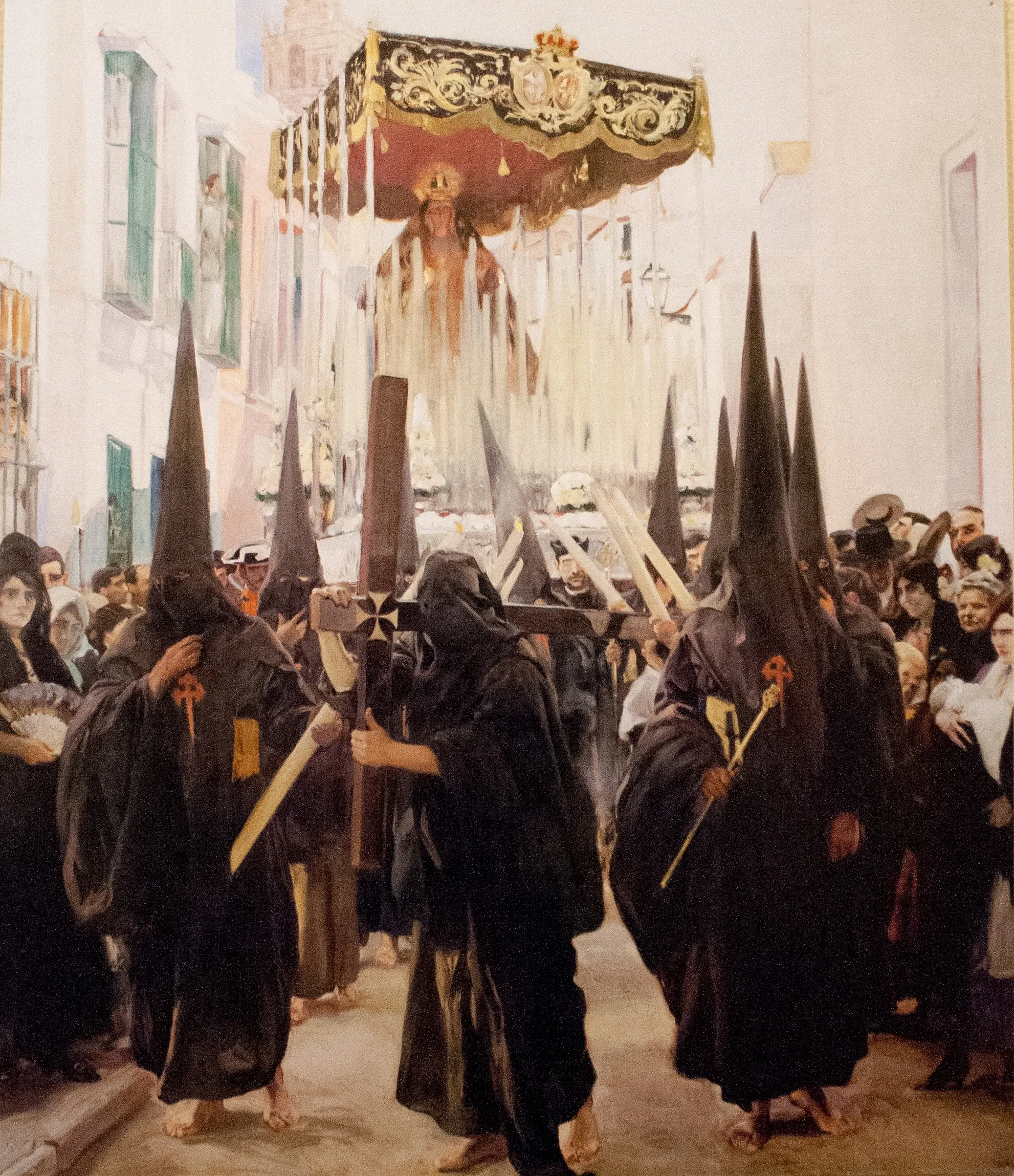
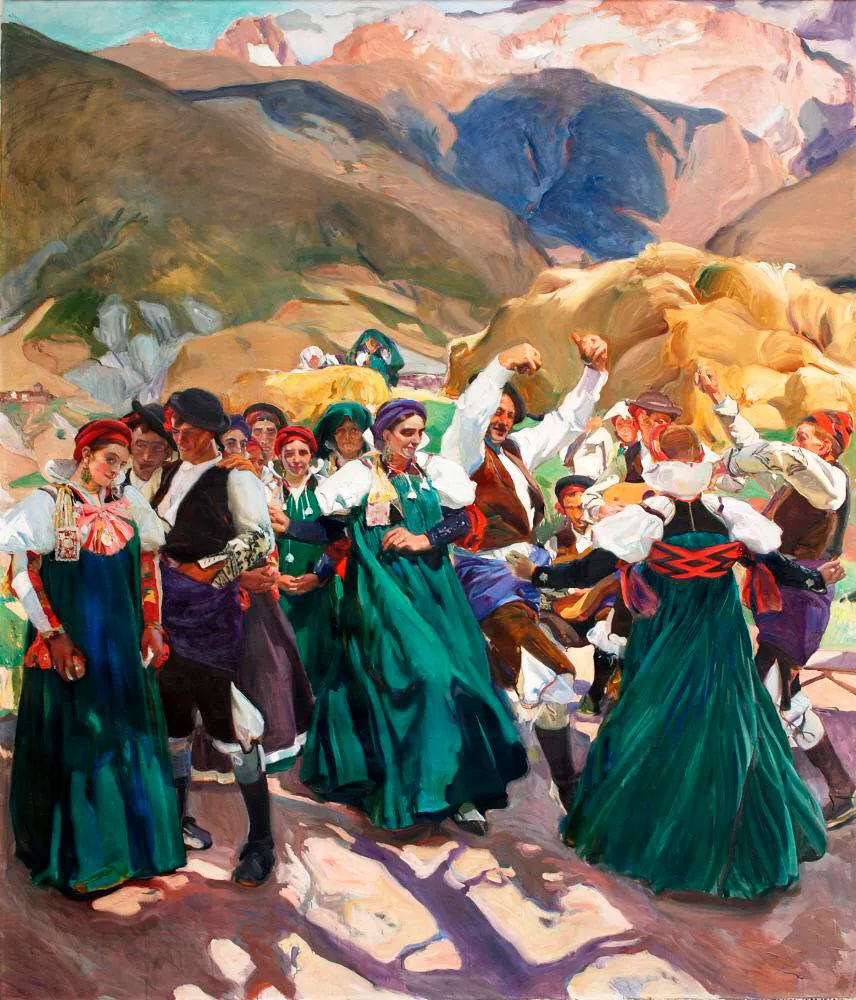
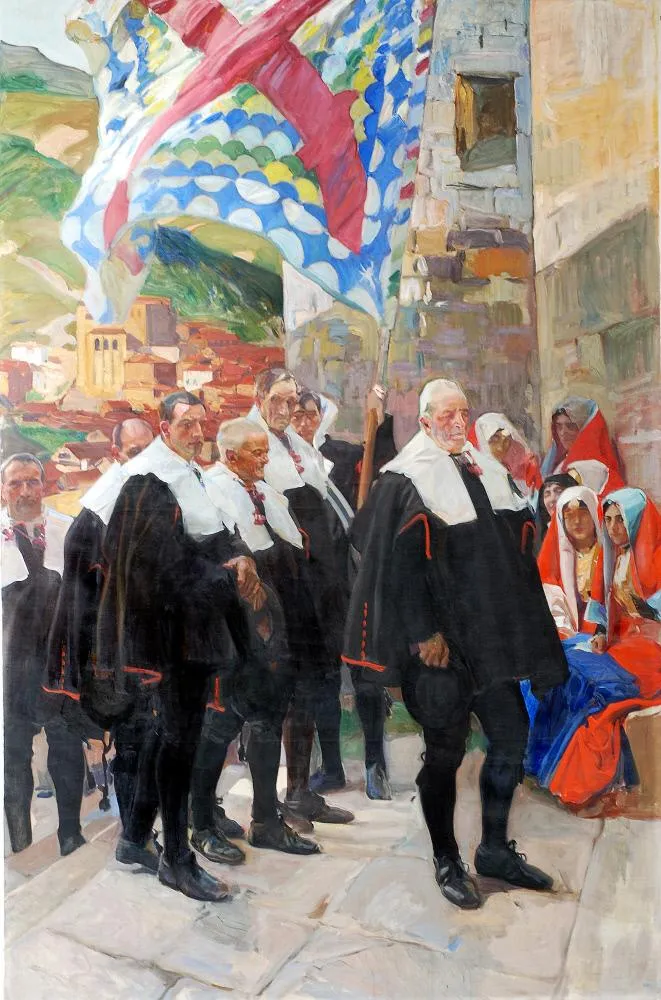
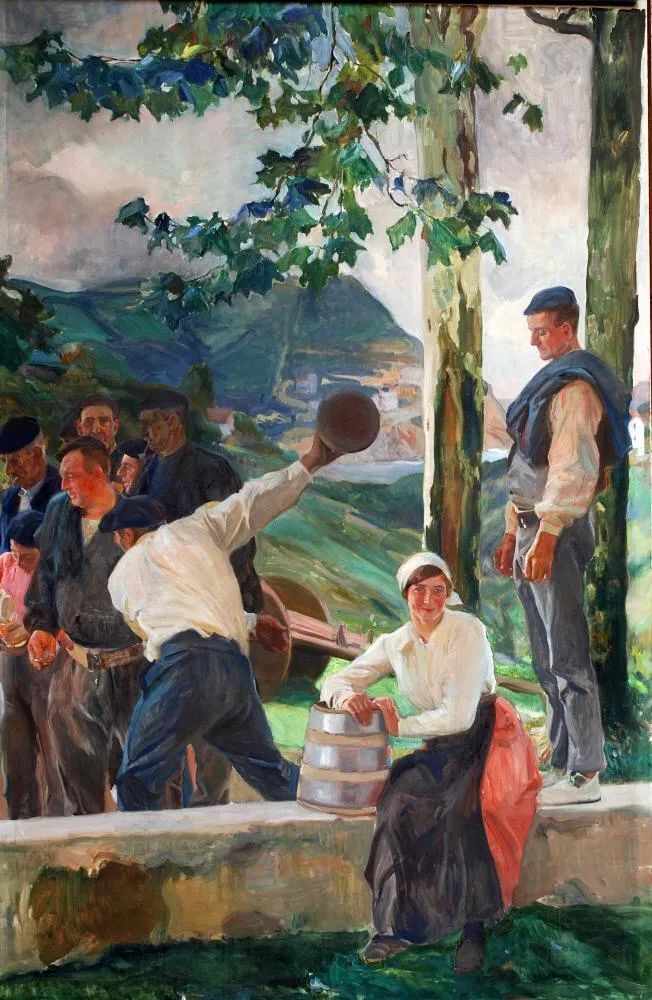
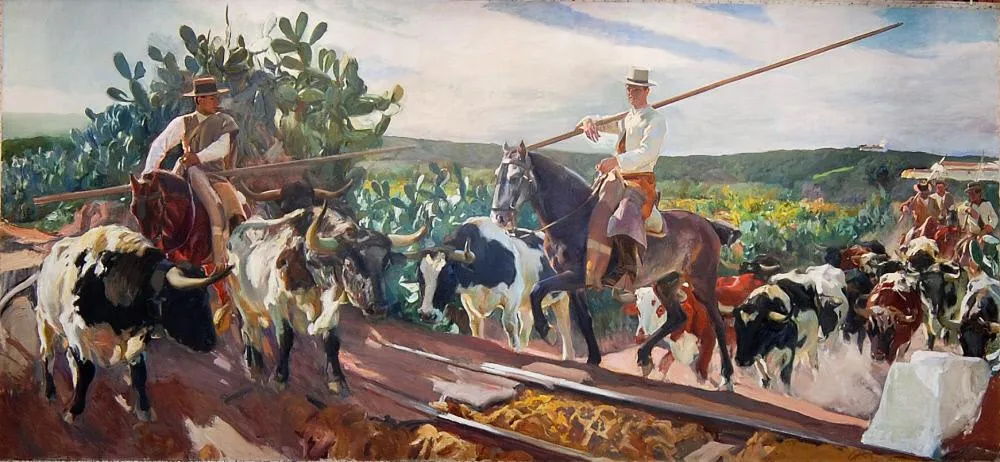
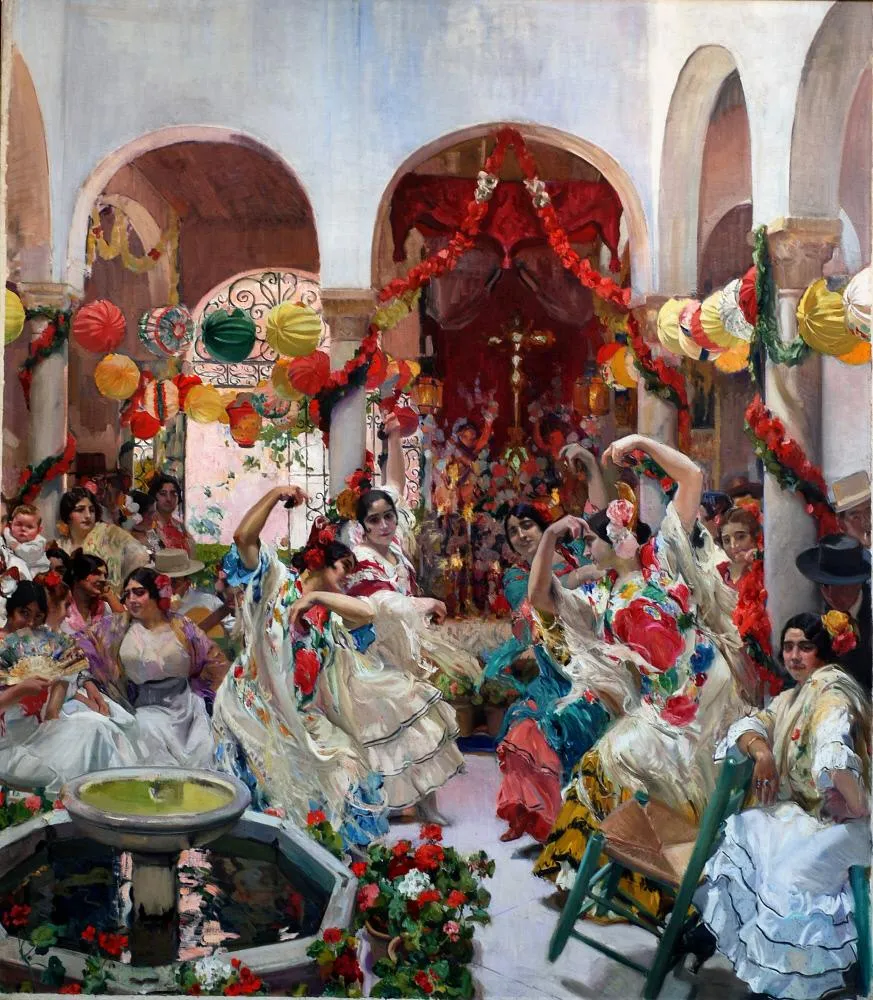
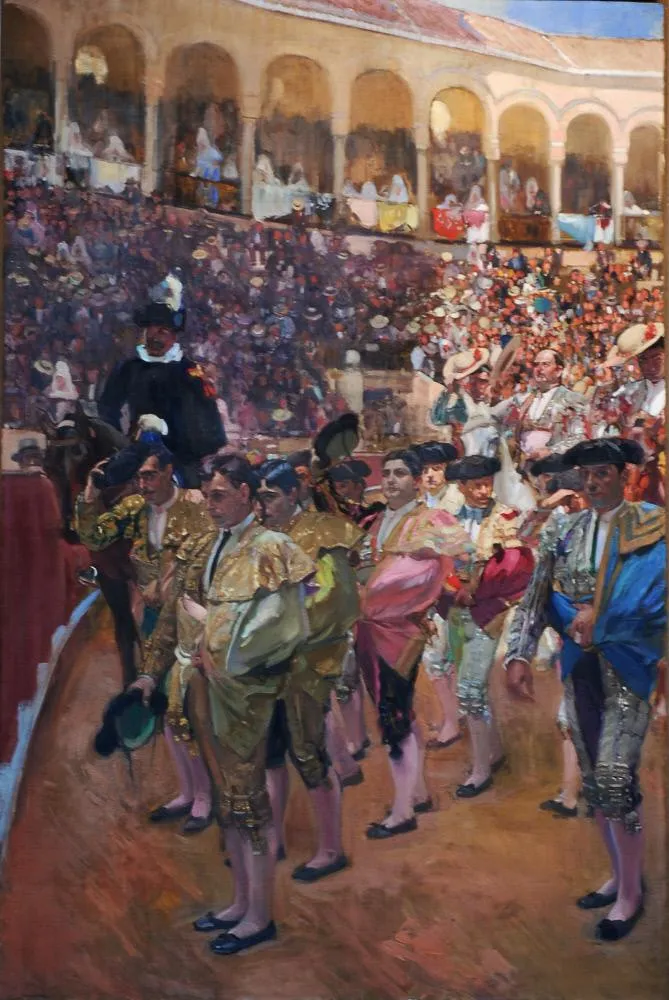
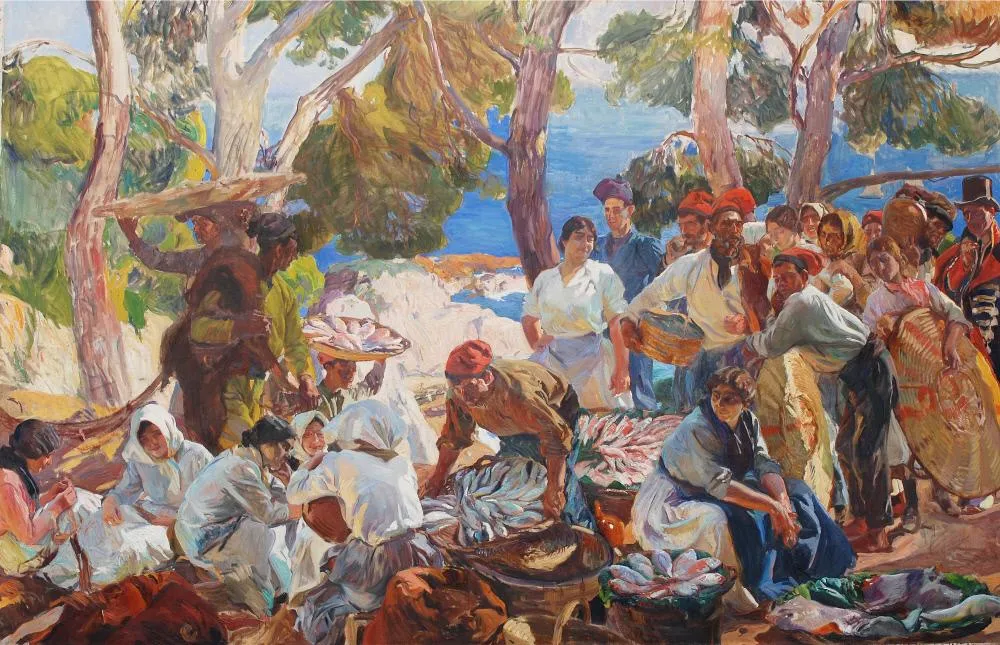
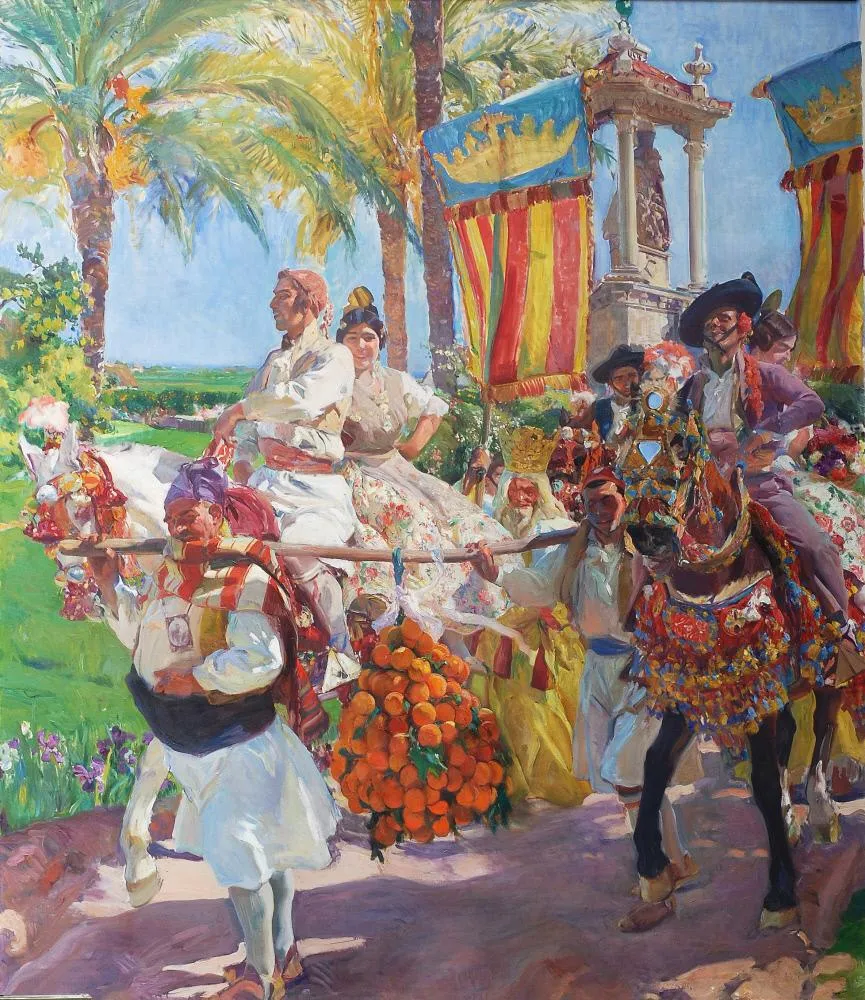
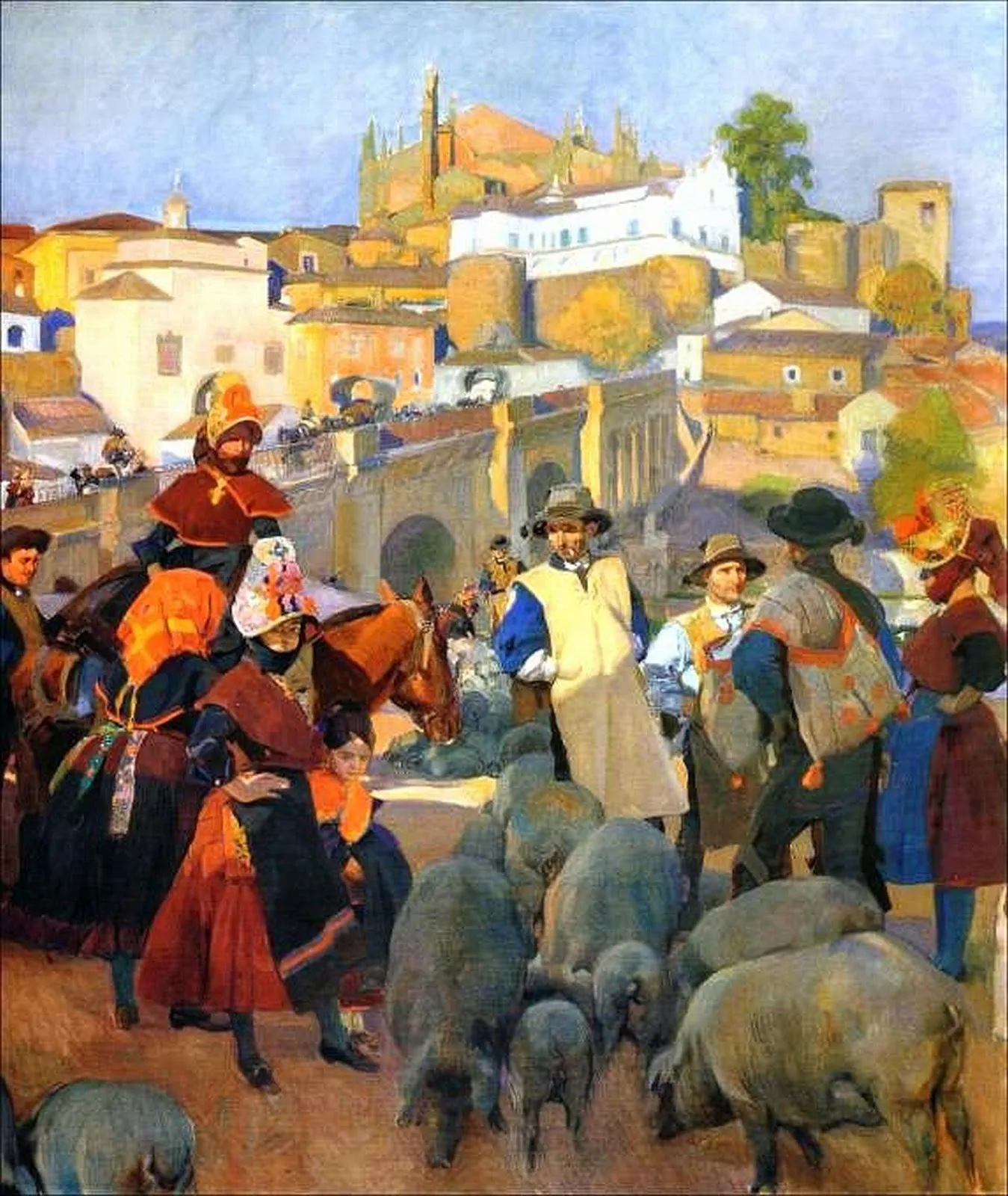
Sorolla's masterpiece — fourteen vast canvases that wrap an entire room.
He thought it his greatest work. It is free to see. And almost nobody knows it is there.
In 1911 the American scholar and philanthropist Archer Milton Huntington — founder of the
Hispanic Society of America in upper Manhattan — gave Sorolla the commission of his life:
a single monumental cycle of paintings depicting the regions, peoples, costumes and customs
of Spain. Sorolla called it simply the Vision of Spain.
It very nearly consumed him. From 1912 to 1919 he travelled the country and painted, almost
entirely outdoors and at full scale, fourteen panels that stand nearly twelve feet tall and
run to some two hundred feet end to end. They were inaugurated in their own gallery in 1926,
three years after his death — a room built so that the visitor stands surrounded by Spain on
every side.
Both painter and patron understood what they were preserving. The Spain Sorolla recorded —
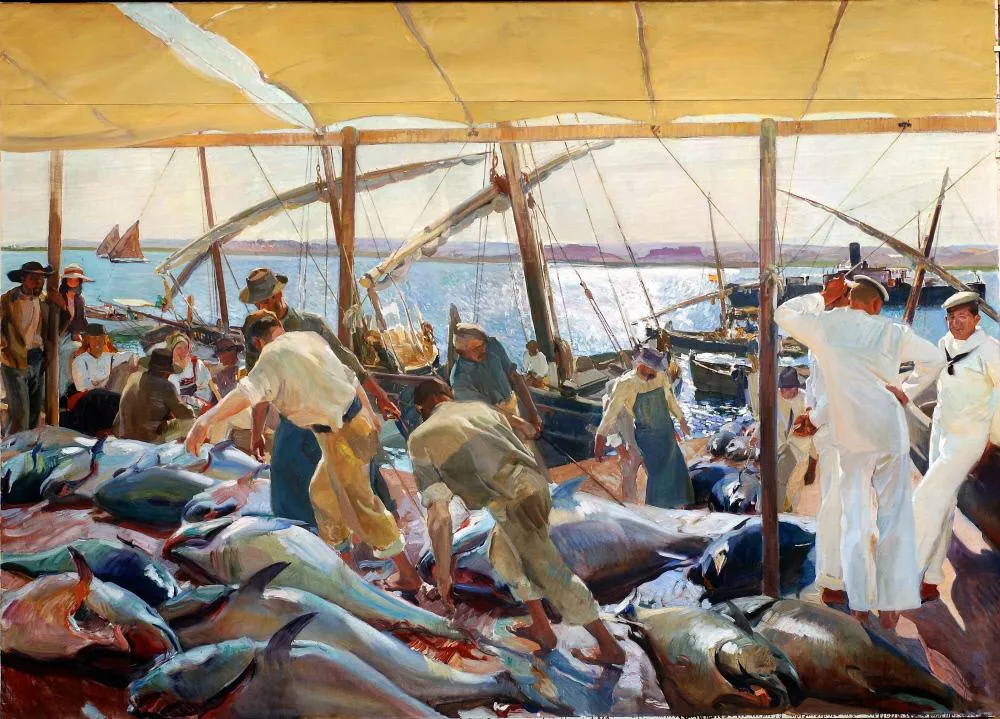
the pilgrimages, the markets, the dances, the fishermen hauling tuna at Ayamonte — was, in
their own words, "already on the point of disappearing." It is part travelogue, part
elegy, and entirely alive with his light.
The work made Sorolla rich and, many feel, wore him out. Yet the old spark never left it —
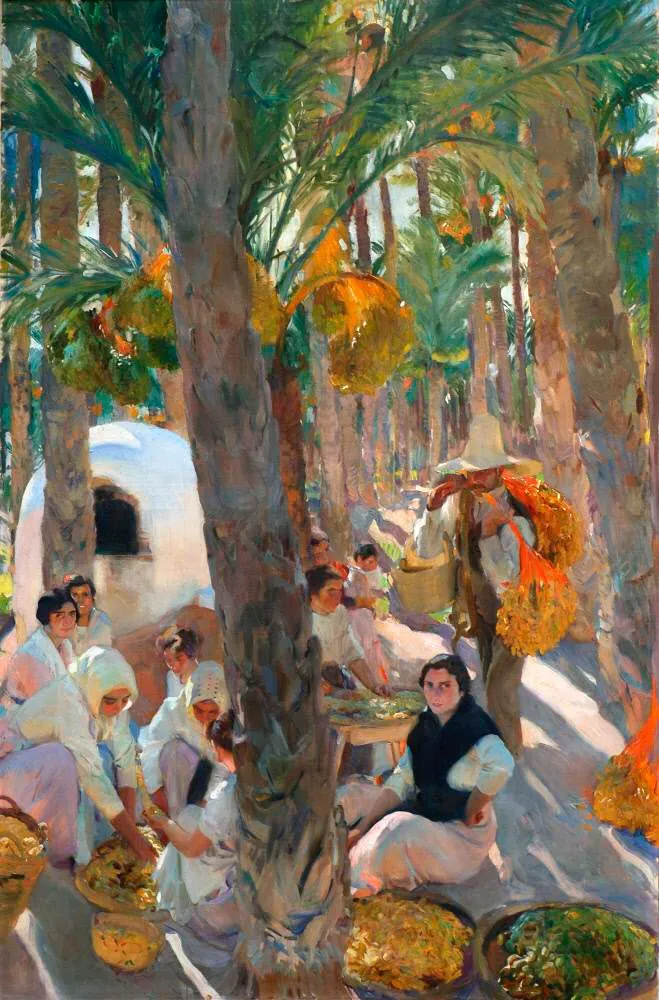
it burns brightest in the last two panels he finished, The Tuna Catch and
The Palm Grove of Elche, both 1919.
14
panels
~12 ft
tall
200 ft
end to end
8 years
1912–1919
The patron and the commission
Huntington & the Commission
The man who made the Vision of Spain possible was no ordinary millionaire. Archer
Milton Huntington (1870–1955) was the son of Arabella Worsham; when she married the railroad
magnate Collis P. Huntington in 1884, Collis adopted the boy, and Archer became heir to one of
the great American fortunes. Instead of merely enjoying it, he became a serious scholar — a
poet, an archaeologist, and a translator who put the medieval
Poema de Mio Cid, the great Spanish epic of El Cid, into English. Spain had gripped him
since boyhood, and in 1904 he founded the Hispanic Society of America in upper Manhattan: a free
museum and library devoted to the art and culture of the Spanish-speaking world, which opened to
the public in 1908.
It was Huntington who carried Sorolla to America. In 1909 he staged a one-man show of the
painter's work at the Hispanic Society that became a sensation — some 356 works on the walls,
around 160,000 visitors through the doors in a single month, and close to 200 paintings sold.
Few living artists have ever been received like that in New York. Two years later, in November
1911, Huntington offered him the commission that would occupy the rest of his working life.
Here the story turns on a creative conversation between patron and painter. Huntington's first
thought was a history of Spain: great events, conquests, the procession of the centuries.
Sorolla's heart lay elsewhere — not in the past but in a living Spain: its regions and
peoples, its costumes and customs, its work and markets and festivals, seen in the open air and
the present tense. Huntington, to his great credit, gave his artist free rein, and Sorolla gave
the cycle the title that says exactly what he meant: The Provinces of Spain. So the
vision at the heart of the work was Sorolla's own. What Huntington supplied was the frame: the
idea of the whole breadth of Spain, gathered for an American public into one
purpose-built room.
That frame explains the cycle's curious geography. Sorolla was a Valencian to his bones — twenty
years of beach scenes had made his name almost a synonym for the light of his own coast — and
yet Valencia receives only two of the fourteen panels (Las Grupas and the
Palm Grove of Elche). The reason is the commission itself. Its whole purpose was to show
Americans the range of Spain, and Valencia was already, in every gallery-goer's mind,
simply Sorolla. So the work pushed him outward, into regions he knew far less well — the
high tablelands of Castile, the Roncal valley of Navarre, the pilgrim roads of Galicia, the
Basque country. Andalusia, by contrast, carries five panels, more than any other region:
flamenco, the bull-running, the Holy Week procession — the picturesque south that the age took
to be the most "Spanish" Spain of all.
A word on where this account comes from. The broad outline — the 1909 triumph, the 1911
commission, the quarrel over history versus a living Spain — is well documented; the definitive
authority on Sorolla's life and work is his great-granddaughter, the art historian
Blanca Pons-Sorolla, whose catalogue underpins everything serious written about
him.
Further reading:
Wikipedia: Vision of Spain ·
Wikipedia: Archer Milton Huntington ·
The Hispanic Society
The series
The Panels
All fourteen panels,
in the order Sorolla painted them, shown uncropped at their true proportions. Select any one
to see it large, with its date and source.
This was never meant as a survey of the whole country — it is a chosen Spain: rural,
festive, traditional, and drawn most warmly to the south, where Andalusia alone accounts for
five of the fourteen (three from Seville).
What is missing tells you as much as what is there. No Madrid, no Barcelona as a city, no
factories, no railways, no politics — none of the modern, urban, industrial Spain that
actually existed in 1913. The islands go unpainted. Sorolla and Huntington were not
documenting a country so much as preserving a folk-memory of one, costume by costume, before
it vanished.
A century on
In Sorolla's Footsteps
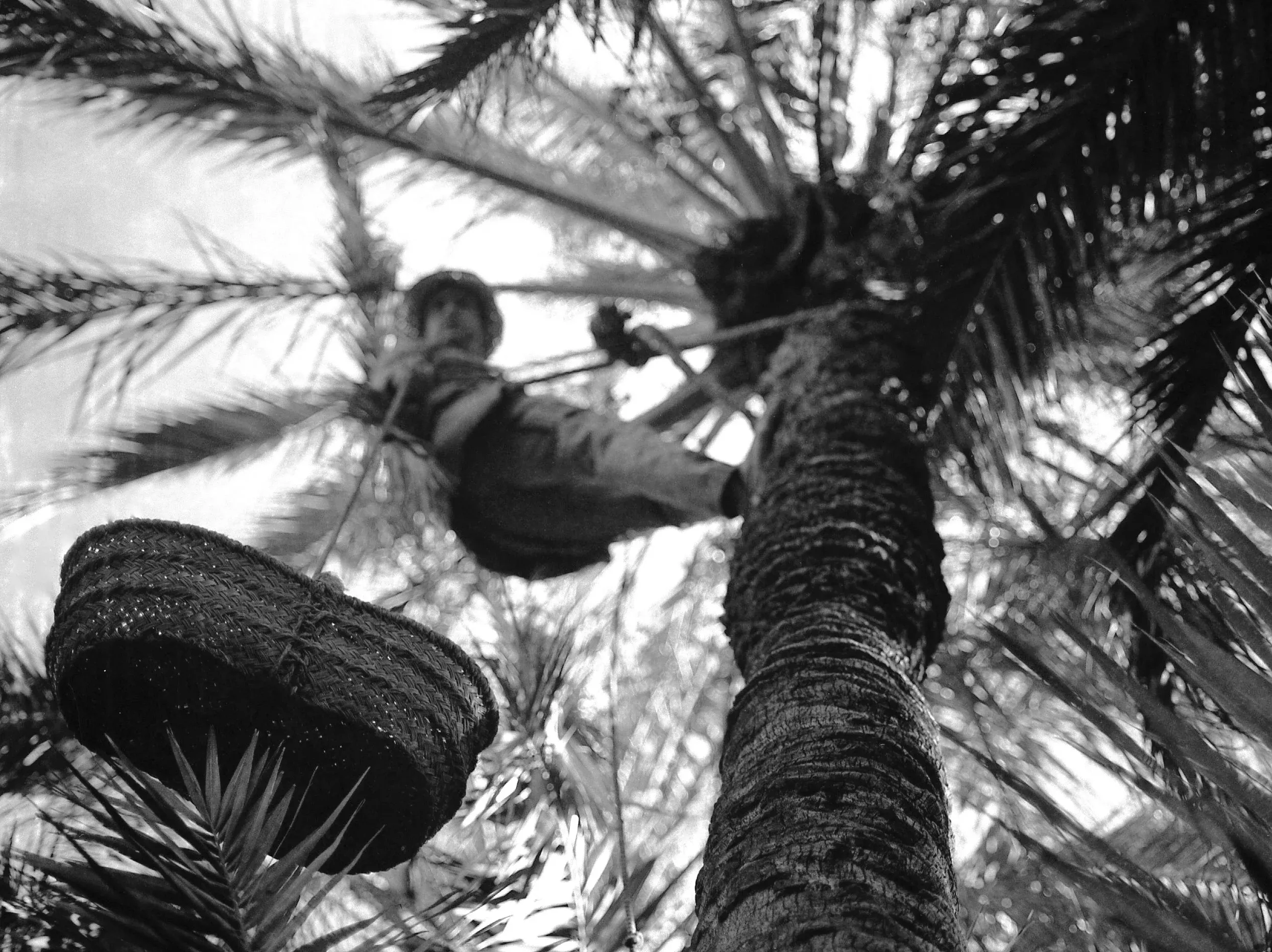
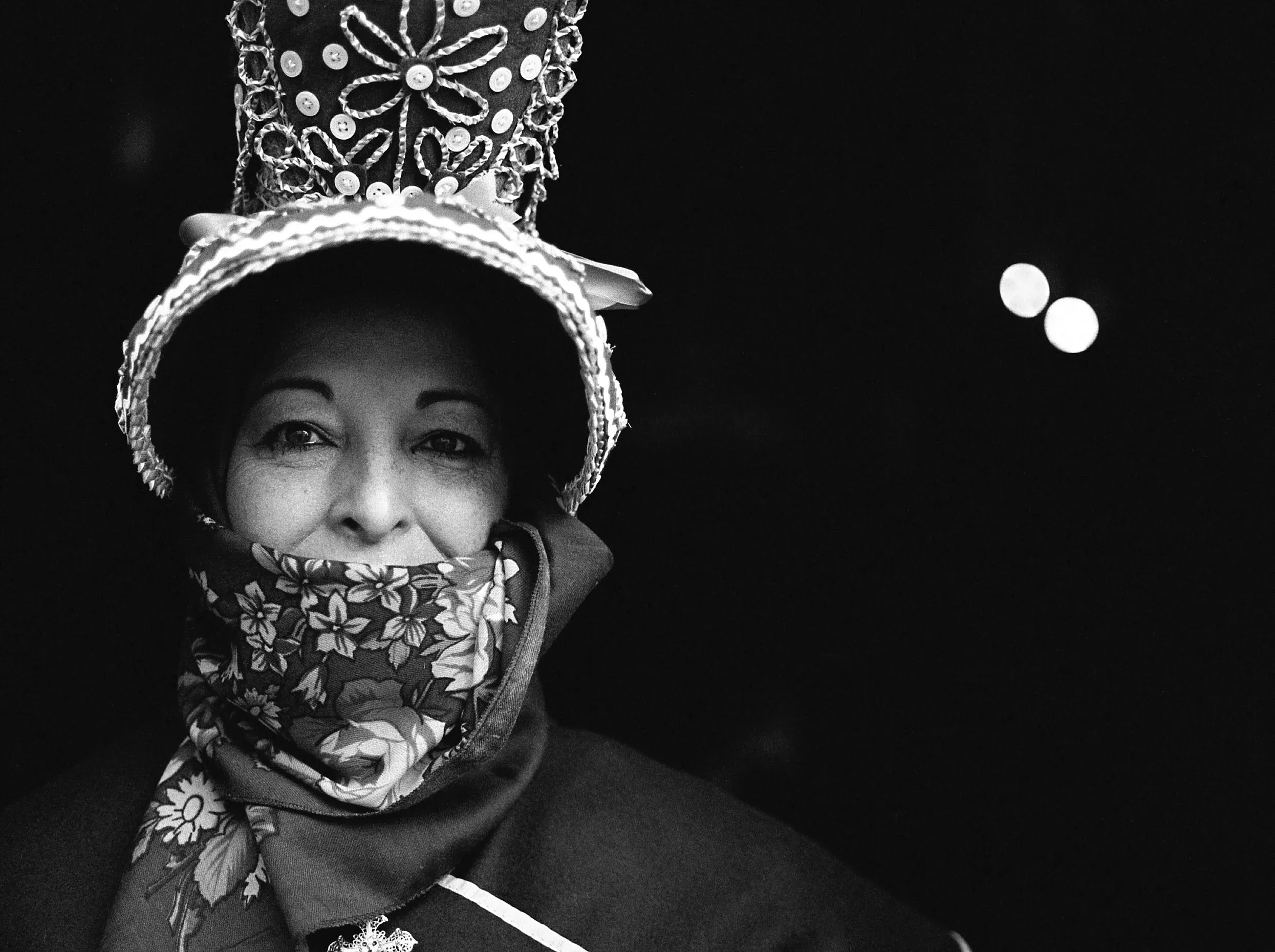
A hundred years after Sorolla finished the cycle, the photographer and art historian
Daniel Davies-Llewellyn spent six years travelling the same country —
finding the people and places behind the panels. His black-and-white series,
Sorolla, 100 Years On, and his film, The Man Who Painted Spain, are a
natural companion to the map above: Sorolla’s Spain in colour, and the same Spain today in
monochrome. A few of his frames:
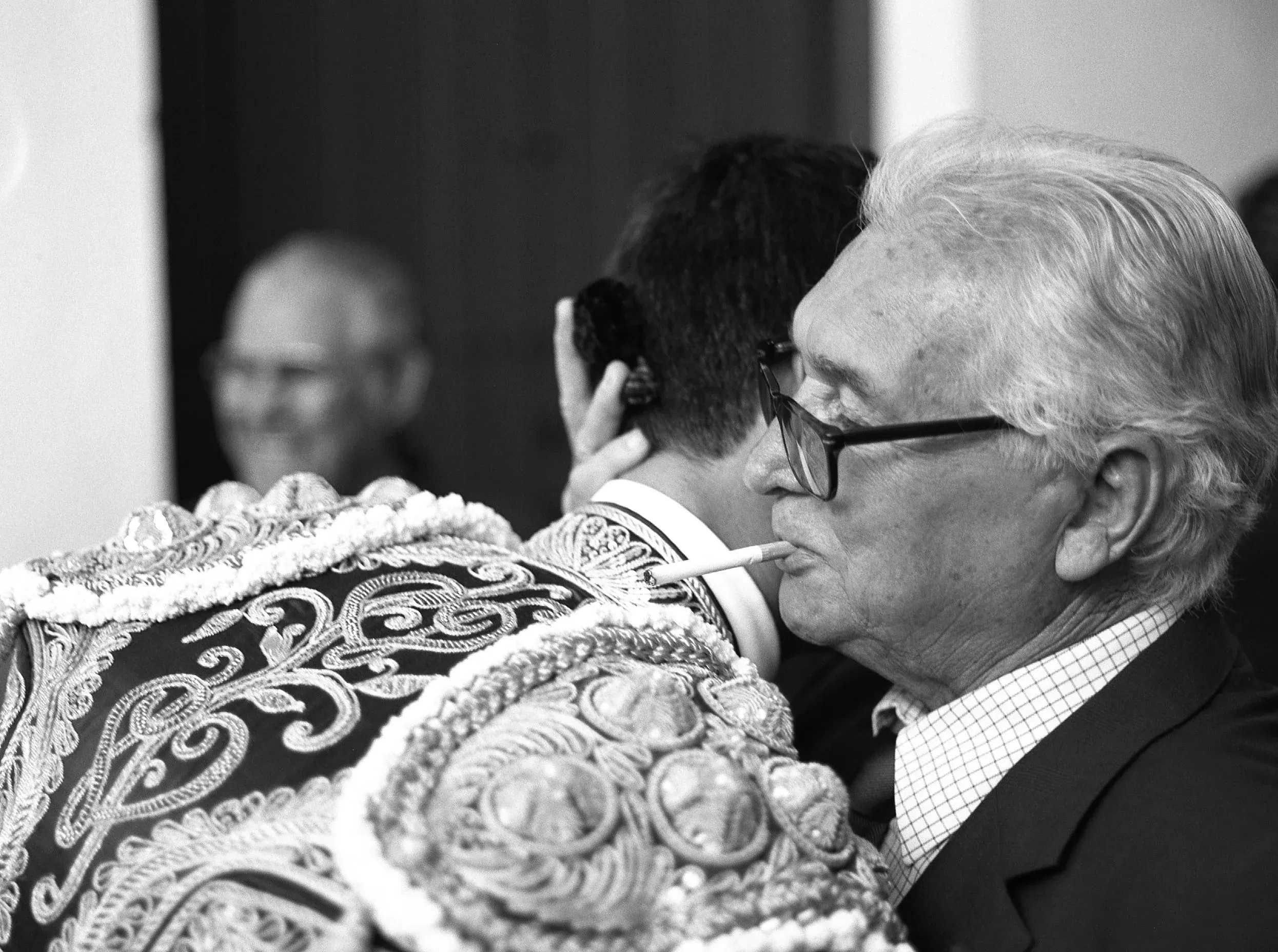
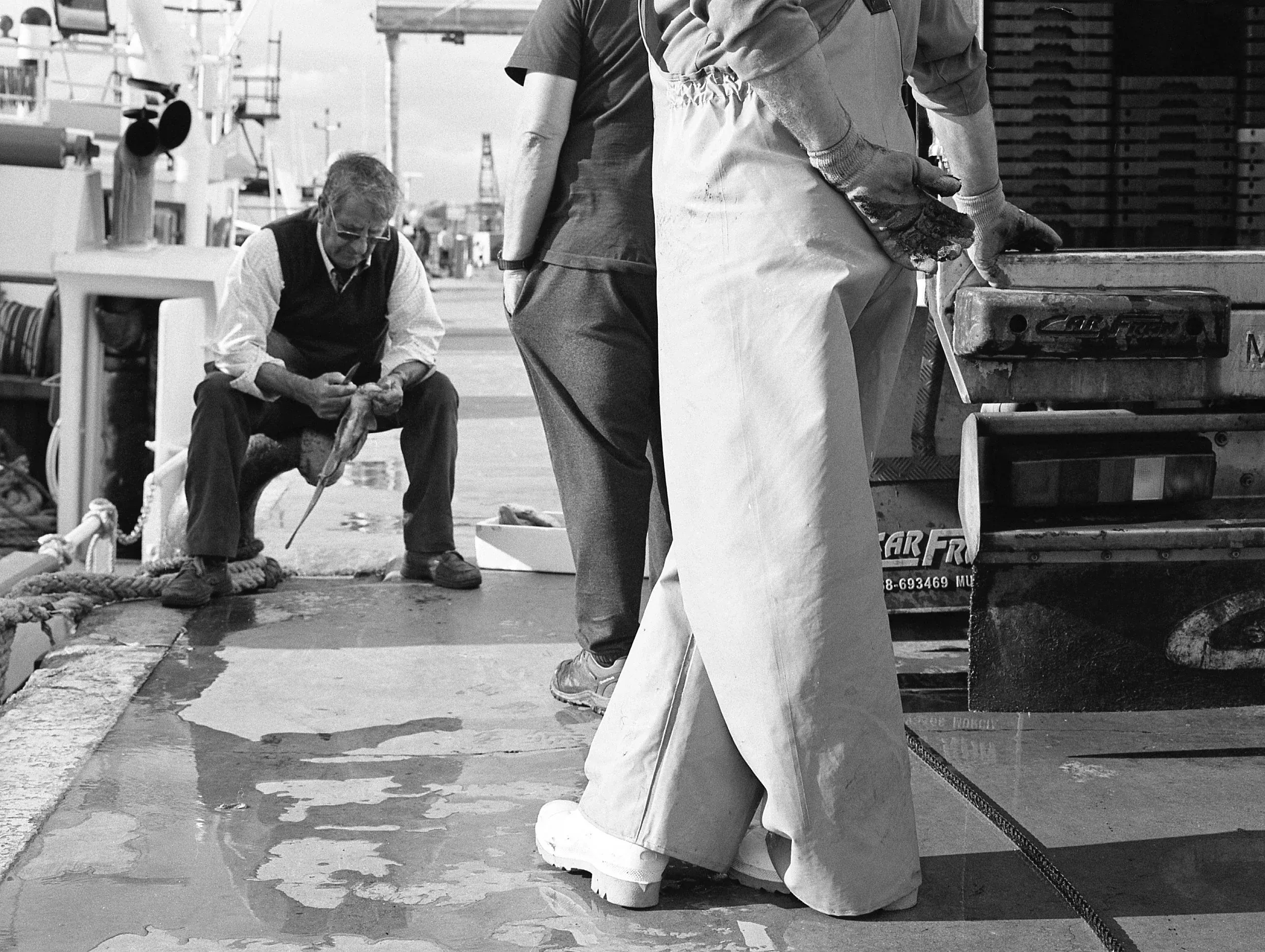
ElcheA harvester roped into the canopy of the same palm groves Sorolla set down in 1919.ExtremaduraFestival dress at Montehermoso — the embroidered, button-studded hats still worn today.SevilleA torero’s gold-threaded traje de luces before the ring — the suit of lights, still.AyamonteThe quay where the tuna fleet still lands, a hundred years after Sorolla’s final panel.
The Man Who Painted Spain — trailer, with English subtitles, following Sorolla
across all the regions of Spain. Davies-Llewellyn’s film screens in the Sorolla Room at the
Hispanic Society in New York in September 2026.
Sorolla painted these regional idylls between 1912 and 1919 — and the Spain just outside the
frame was anything but idyllic. The country was still reeling from the loss of its last
colonies in 1898; Barcelona had erupted in the bloodshed of the Semana Trágica in
1909; a general strike convulsed the nation in 1917; and the old order of monarchy, Church and
landowner was straining against anarchism, socialism and the rising nationalisms of Catalonia
and the Basque Country — the very regions he was painting as timeless and serene.
Within four years of the last panel, Spain fell under the dictatorship of Primo de Rivera; by
1931 the king was gone; and in 1936 the country tore itself apart in a civil war that killed
hundreds of thousands. The unified, harmonious Spain of folk dance and pilgrimage that Sorolla
hung on the walls of New York was, even as he painted it, fracturing along precisely the
regional and class lines his canvases smoothed away. That is the quiet tragedy of the cycle:
he set out to capture a Spain "on the point of disappearing," and it disappeared more violently
than he could have known.
In awe of the man
How Did One Man Paint Four Thousand Pictures?
Sorolla's catalogue runs to some 4,200 works — the first volume alone lists
1,063 paintings made between 1876 and 1894. Across his life that is more than two finished
pictures a week, every week, for forty years. The natural question is where the shortcut was.
There wasn't one. The truth is the opposite, and it is the most astonishing thing about him.
A great many of those works are beach studies painted alla prima — wet into wet, out
of doors, in a single sitting, racing a shift of light that would not wait. Far from a trick,
this is the hardest thing a painter can attempt: every stroke laid down once, correctly, with
no glazing back over a mistake. Only a draughtsman of total command can work at that speed and
be right. His quickness was never haste — it was mastery so complete it looked like ease.
And when the work demanded slowness, he gave it without stint. The grand portraits took days;
the Vision of Spain took eight years and, in the end, his health — he was felled by a
stroke at his easel in 1920 and scarcely painted again. That is not a man cutting corners. It
is a man who could not stop looking, and who poured everything he had onto the canvas until
there was nothing left to give.
To stand before a Sorolla is to watch sunlight caught alive by someone who painted faster, and
saw light more truly, than almost anyone who has ever lived. The number is not a curiosity to
be explained away. It is the measure of one of the greatest artists the world has known.
Happening now · until 27 May 2027
100 years of the Sorolla Gallery
2026 marks one hundred years since the Vision of Spain was installed. To mark it,
the Hispanic Society is running "A Living Vision: The Sorolla Gallery at 100"
(21 May 2026 – 27 May 2027): rare photographs, reproductions of Sorolla's working sketches,
and excerpts from his own letters tracing the inspiring — and at times arduous — making of
the series, with a companion lecture programme through the year.
When the panels toured Spain in 2007–2010 they drew over two million visitors and became the
most visited exhibition in the country's history. In New York they sit, quietly, in their
own room — and admission to the Hispanic Society is free.