A fellow painter's guide
Joaquín Sorolla
The Master
of Light
The Spanish painter who caught the Mediterranean sun on canvas as no one had before, and no one has since.
Valencia, 1863 — Madrid, 1923
From an orphaned Valencian boy to the western world's master of sunlight.
Left without parents before he was three, Joaquín Sorolla y Bastida rose from the streets of Valencia to the salons of Paris and the museums of America, garlanded in his own lifetime as the finest painter of light the age had seen. I've spent more than thirty years visiting his paintings wherever I can find them — this site is my own record of that admiration, and an attempt to help others discover him too.
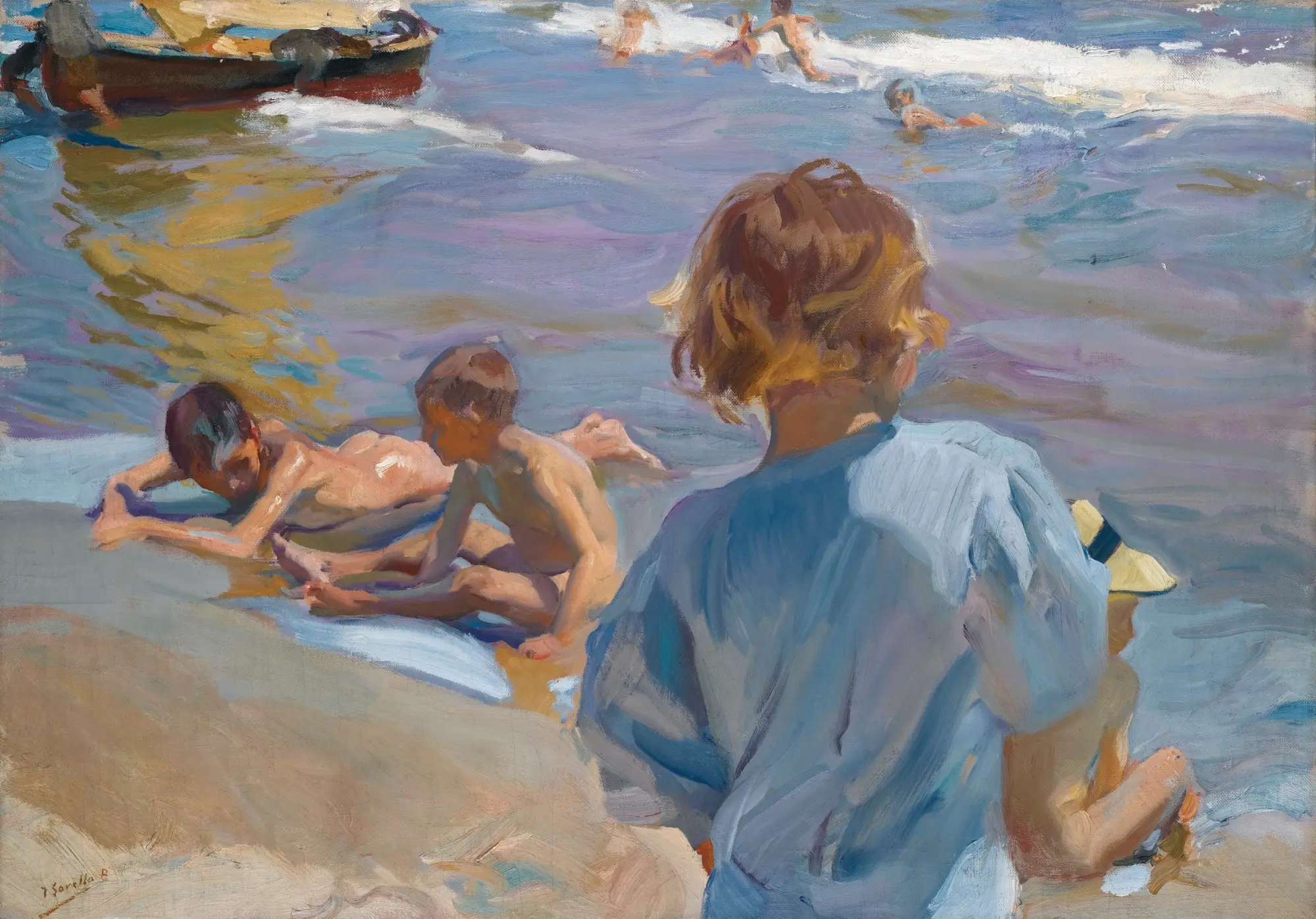
The pictures most people know are the beach paintings — Children on the Beach, The Horse's Bath, Walk on the Beach — made on the wet sand at Valencia in the years either side of 1900, at the speed the light demanded. Before them came the darker canvases of his twenties, Sad Inheritance and The White Slave Trade, which won him his first medals and, I suspect, taught him how to draw.
He was one of the great portrait painters of his day as well — Clotilde again and again, his own children, Louis Comfort Tiffany in a white suit at his easel in a blaze of garden flowers — and he gave the last working years of his life to the Vision of Spain, fourteen enormous panels of the Spanish regions painted for the Hispanic Society in New York. He delivered the final panel in 1919; a stroke in his own Madrid garden the following summer ended his painting life.
The gallery
Selected Works
Beaches drenched in light, water alive with reflection, and the joyful movement of a Valencian summer — painted from life, in the open air.
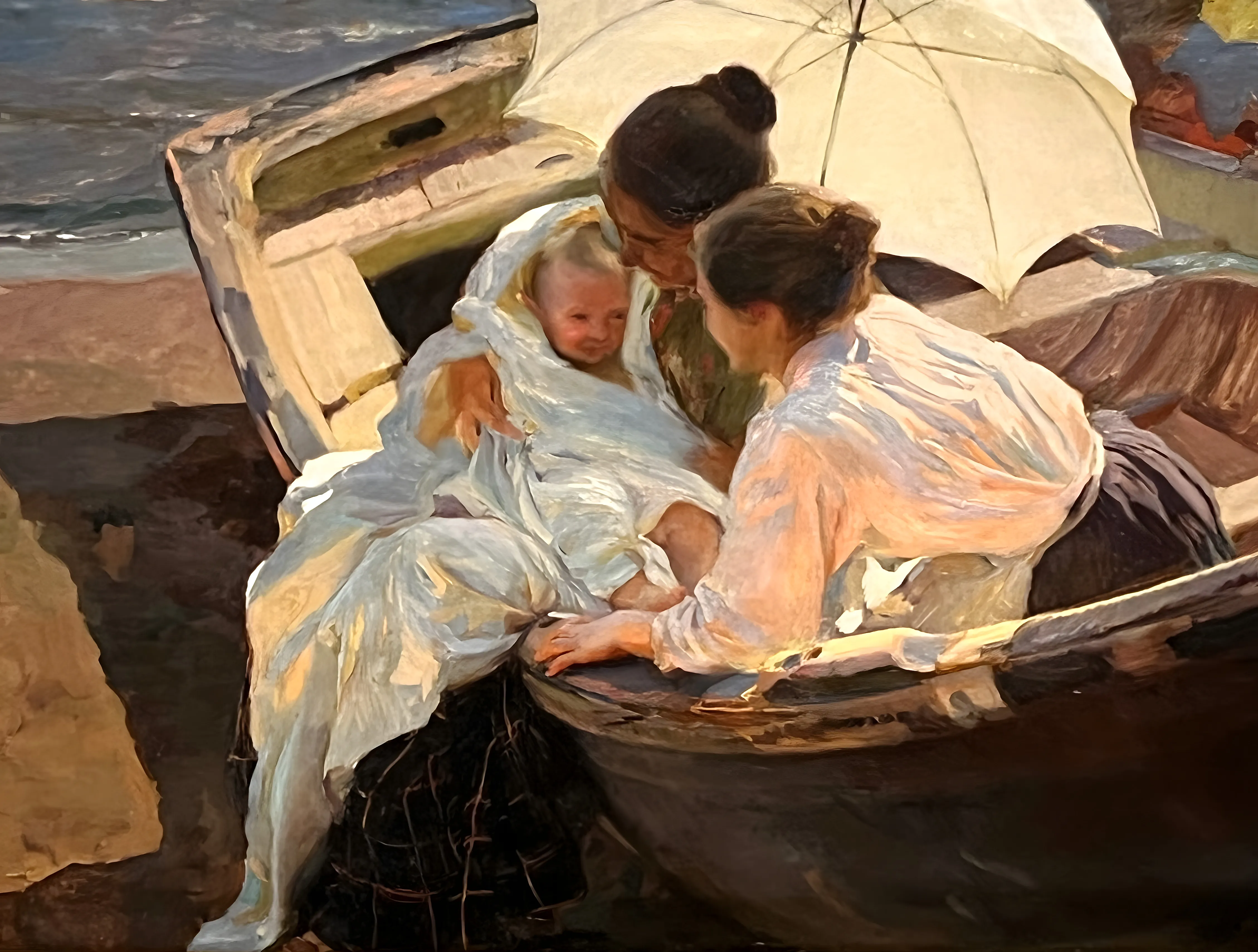
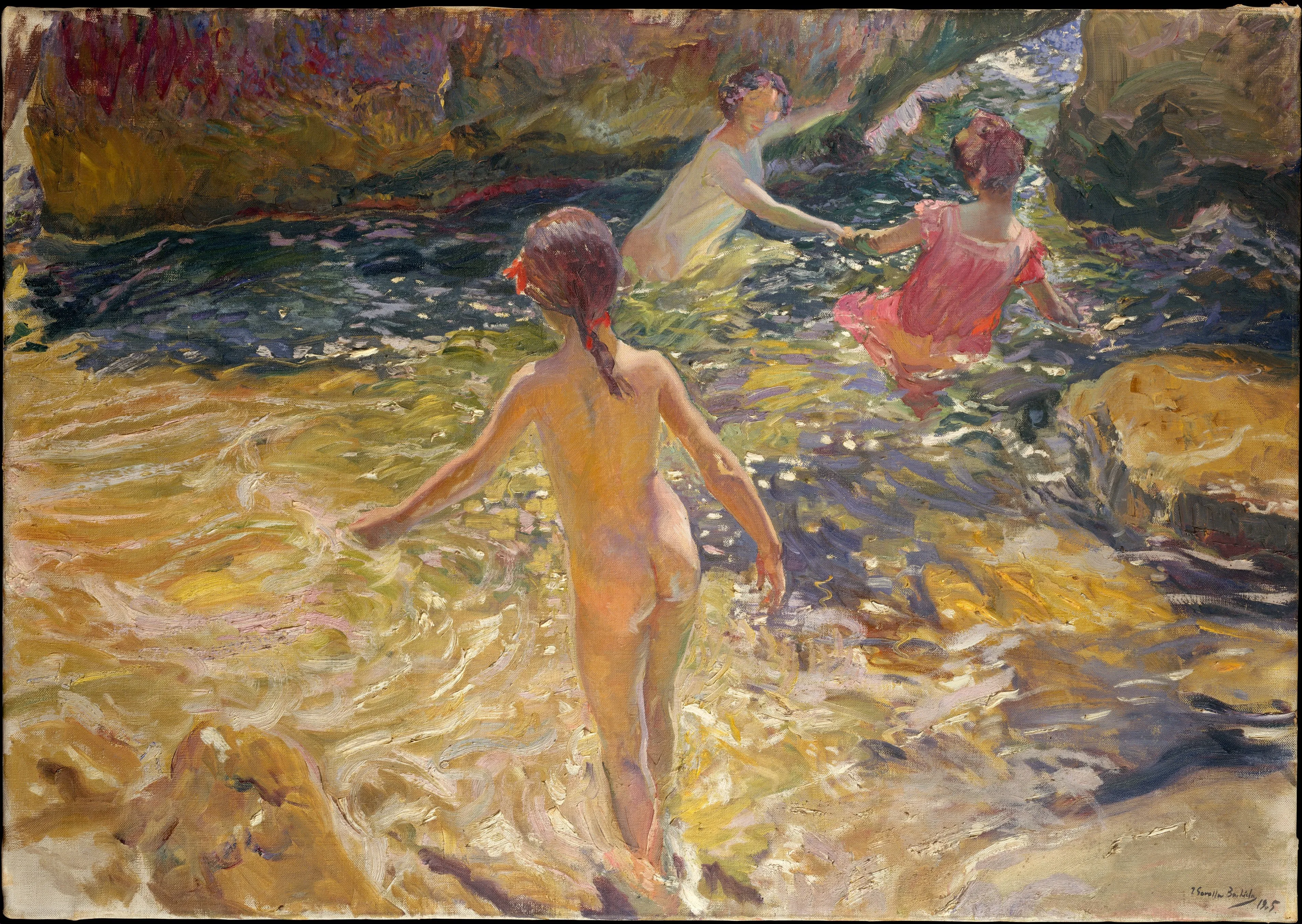
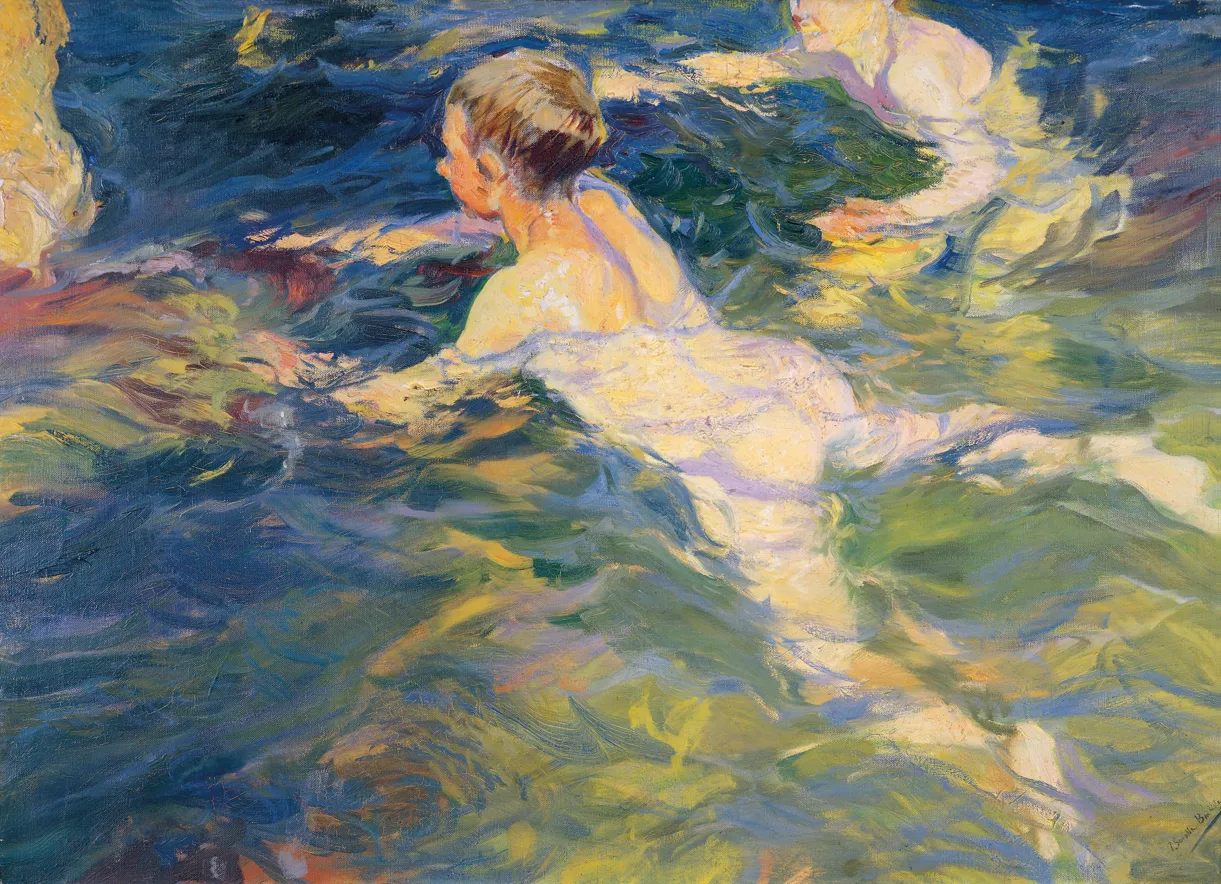
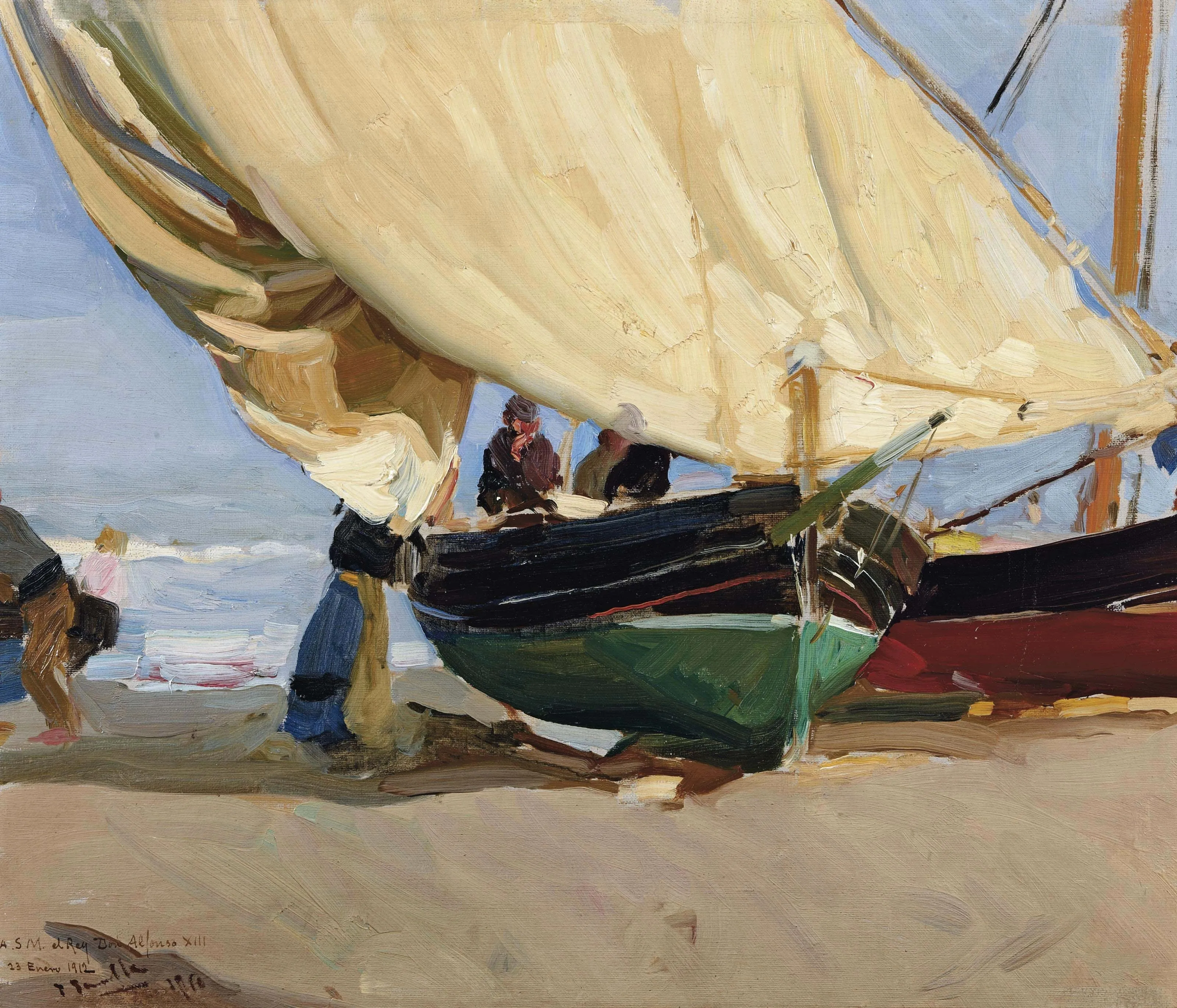
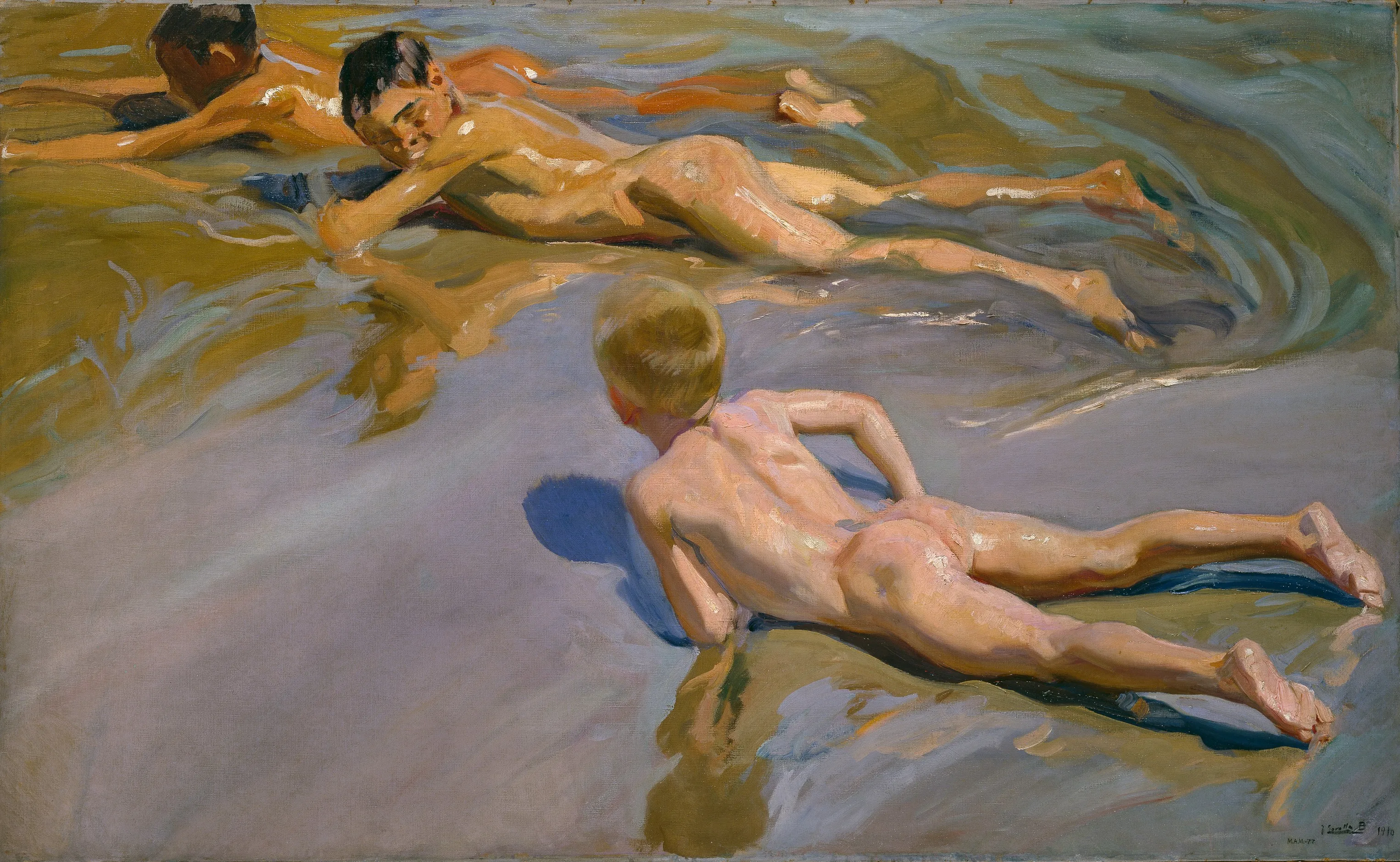
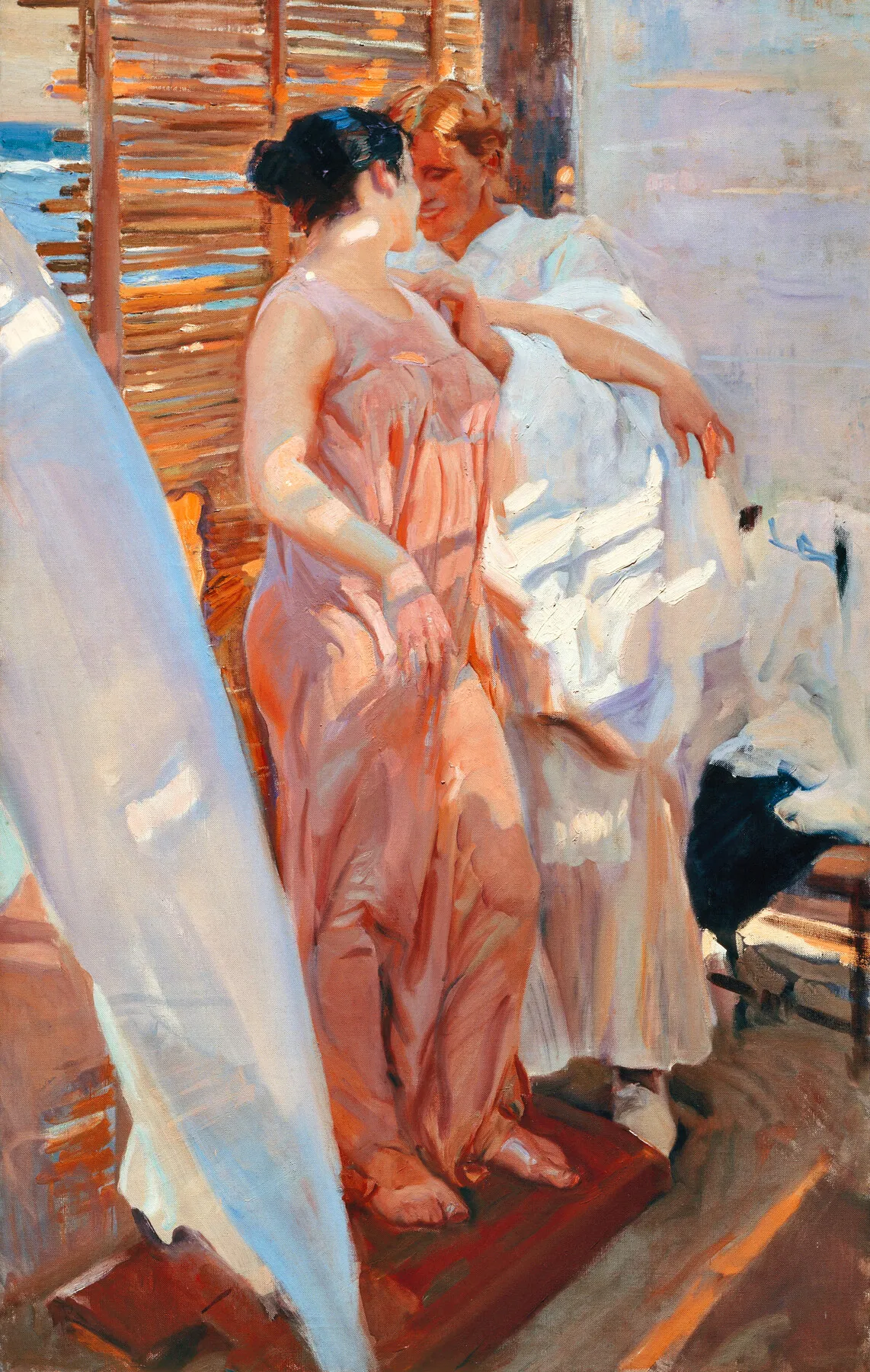
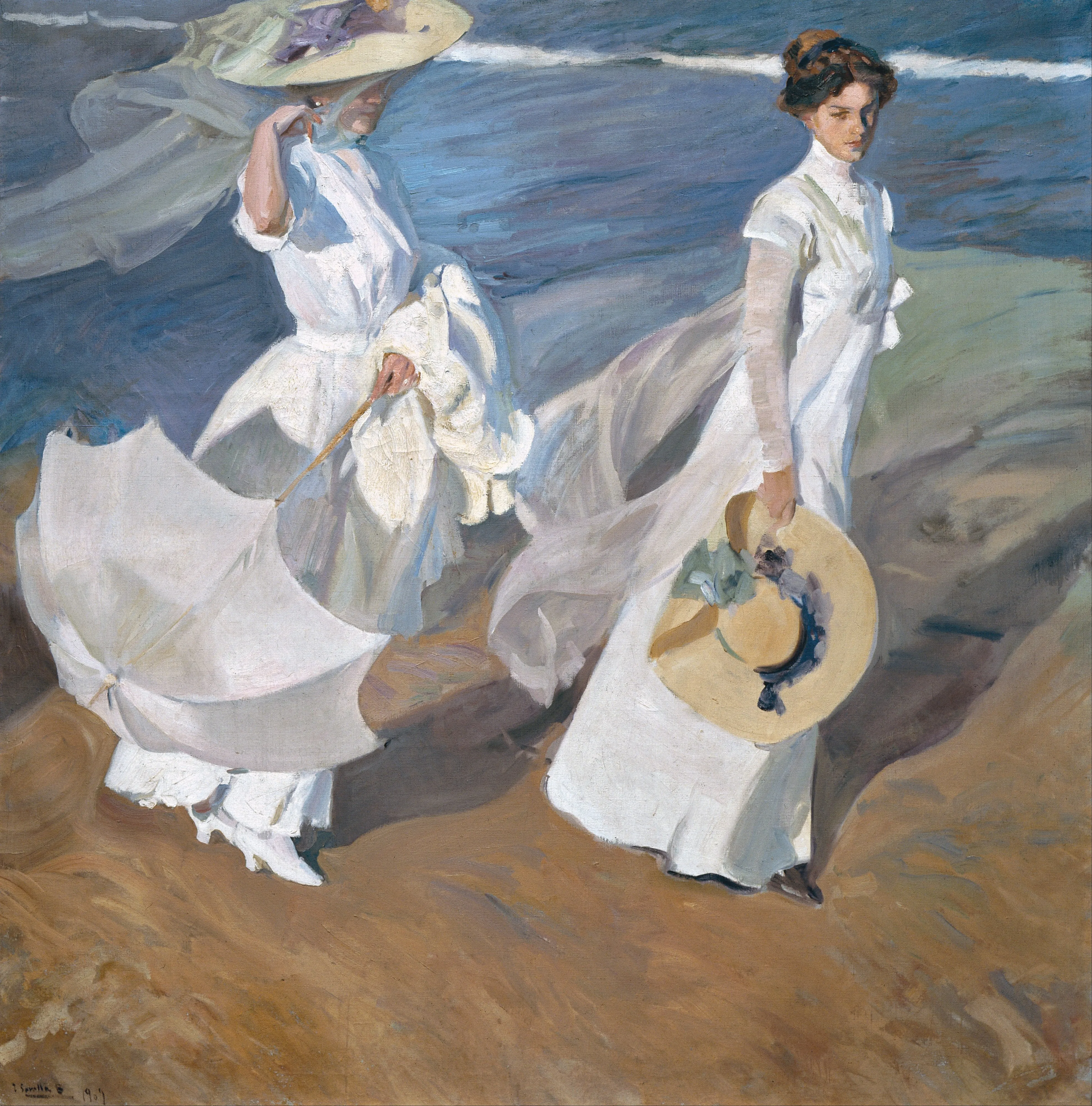
“It would be impossible for me to paint slowly in the open air — the light will not wait.”Joaquín Sorolla
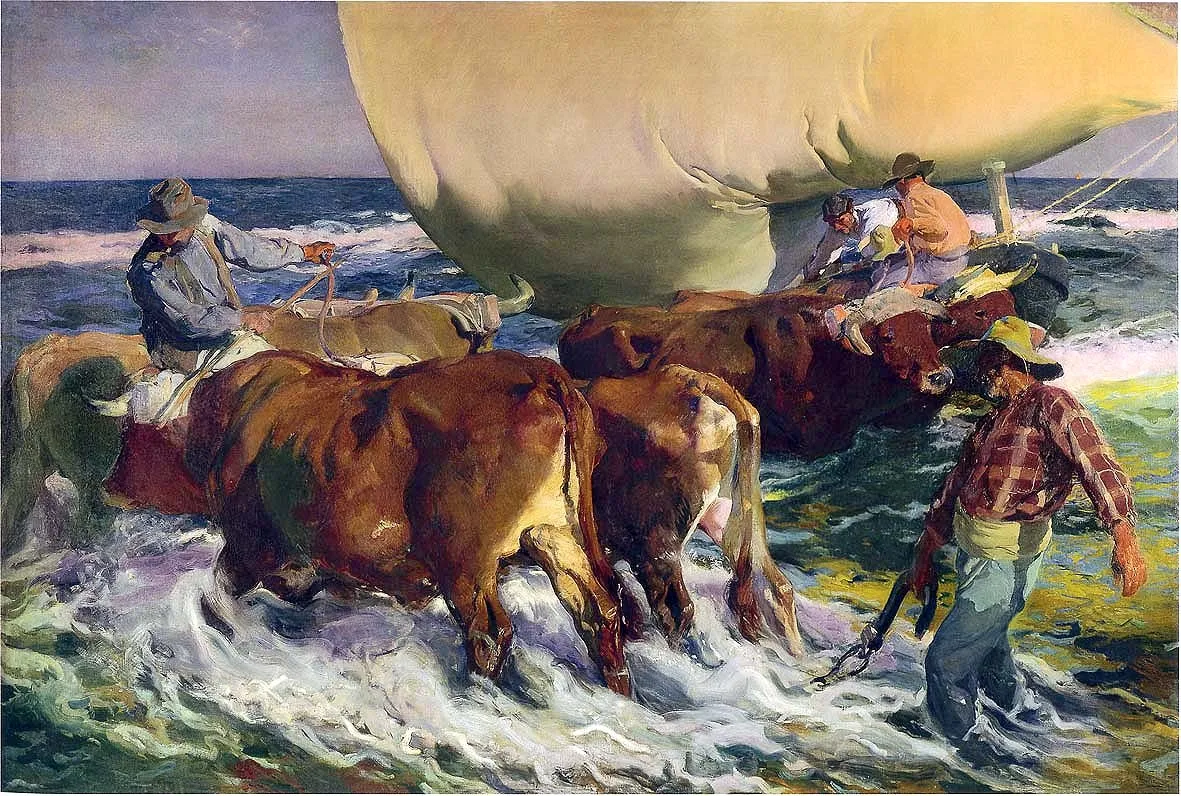
The monumental masterpiece
Vision of Spain
His crowning achievement: fourteen monumental panels — some more than twelve feet high — portraying the regions of Spain in colour, costume and blazing light. Sorolla gave eight years of his life to it.
Today the completed cycle wraps an entire room at the Hispanic Society of America in New York — free to visit. 2026 marks a hundred years since the Sorolla Gallery opened to the public there.
The man
A life lived in the open air.
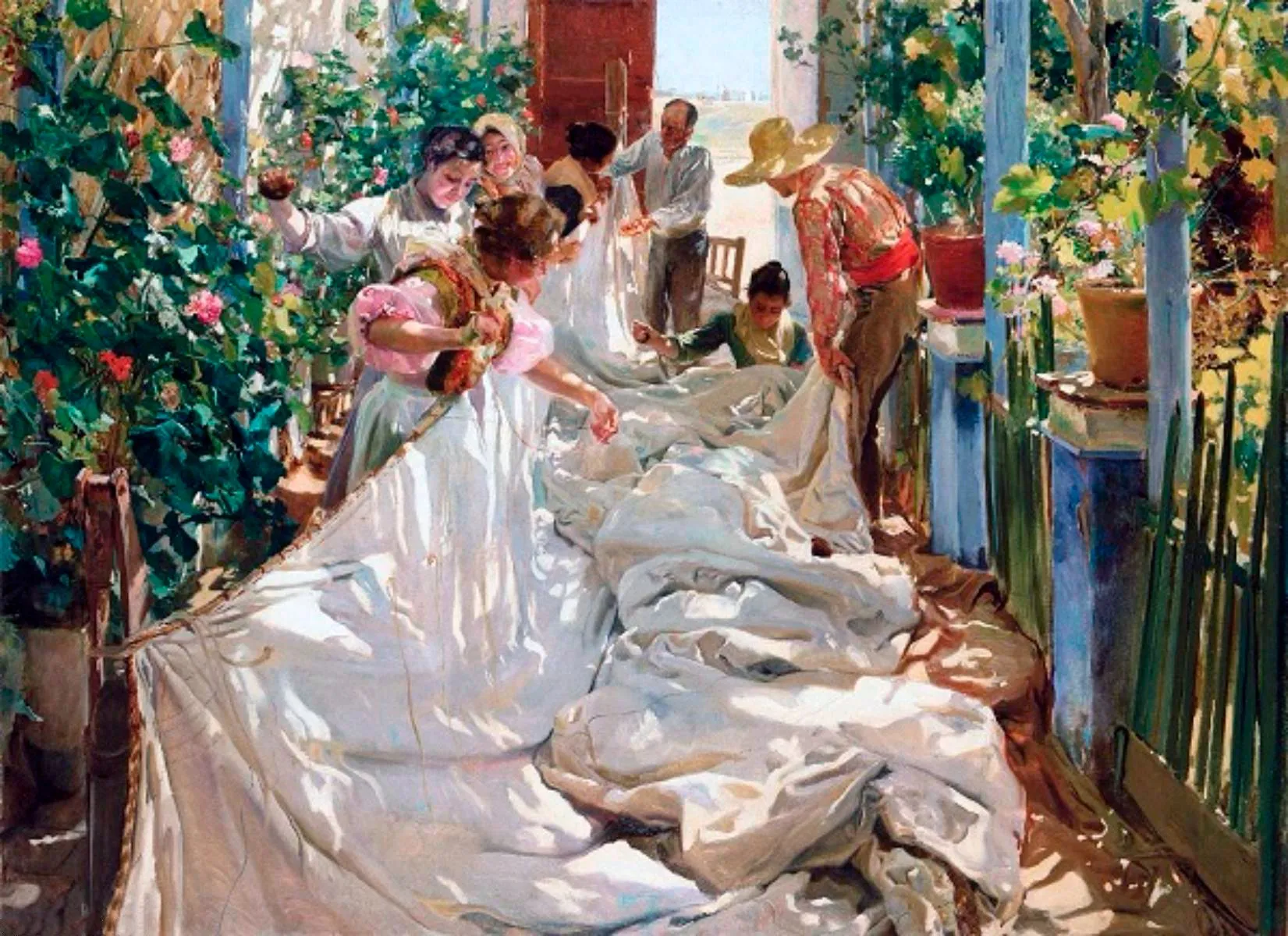
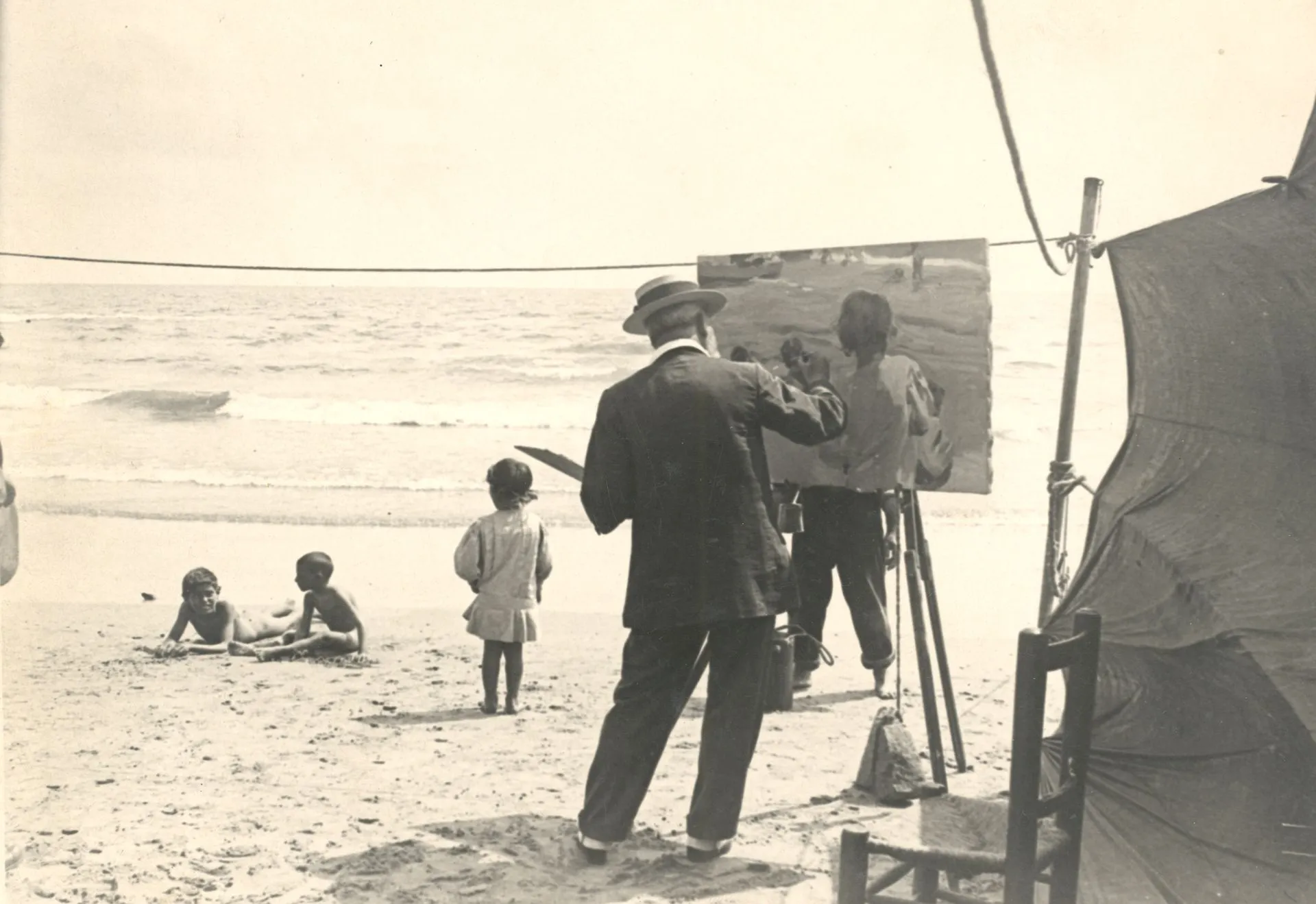
Sorolla painted where the light was — on the sand at Valencia, in the surf, under the full glare of the noonday sun. He worked at speed and from life, wrestling enormous canvases outdoors so that the sea, the spray and the warmth of the day rang true.
Devoted husband to Clotilde, tender father and generous friend, he was as beloved for his warmth as he was admired for his genius. He gave us a world that is forever summer.
Joaquín Sorolla y Bastida
His life & work →Quick facts
Joaquín Sorolla at a glance
Common questions about the painter, answered plainly — with the sources, so you can read further.
- Who was Joaquín Sorolla?
-
Joaquín Sorolla y Bastida (1863–1923) was a Spanish painter, often called the master of light. Joaquín Sorolla is best known for his sunlit beach scenes of Valencia, his portraits, and Vision of Spain, fourteen monumental paintings of the regions of Spain made for the Hispanic Society of America in New York.
Sources: Wikipedia · Hispanic Society of America
- When and where was Joaquín Sorolla born, and when did he die?
-
Joaquín Sorolla was born in Valencia, Spain, on 27 February 1863. In 1920 he suffered a stroke while painting a portrait in the garden of his house in Madrid, and he died at Cercedilla, near Madrid, on 10 August 1923.
- What style did Joaquín Sorolla paint in?
-
Joaquín Sorolla is associated with Impressionism and was the leading figure of Valencian Luminism, a late-Impressionist style devoted to the effects of light. He often worked outdoors and from life (en plein air), painting at speed to catch bright Mediterranean sunlight on sea, sand and figures.
Sources: Wikipedia · Wikipedia: Luminism
- What are Joaquín Sorolla’s most famous paintings?
-
Among Joaquín Sorolla’s best-known paintings are And They Still Say Fish Is Expensive! (1894); Sad Inheritance (1899), which won a Grand Prix at the 1900 Paris Universal Exhibition; the beach scenes Walk on the Beach (1909) and Boys on the Beach; and the Vision of Spain series, painted between 1912 and 1919.
Sources: Wikipedia · Hispanic Society of America
- Where can you see Joaquín Sorolla’s paintings?
-
A great collection of Joaquín Sorolla’s work is at the Museo Sorolla in Madrid, his former house and studio, which opened as a museum in 1932. The Hispanic Society of America in New York holds the fourteen Vision of Spain paintings, the Museo del Prado in Madrid holds works including Boys on the Beach, and his paintings also hang in museums such as the Musée d’Orsay in Paris and the J. Paul Getty Museum in Los Angeles.
Sources: Wikipedia · Hispanic Society of America · Museo del Prado · Musée d’Orsay
- How many paintings did Joaquín Sorolla make?
-
Joaquín Sorolla was remarkably prolific. His great-granddaughter Blanca Pons-Sorolla, after more than thirty years of research for his catalogue raisonné, puts his output at approximately 4,200 works, including oil paintings, watercolours and gouaches. The first volume, covering 1876 to 1894 alone, catalogues 1,063 works.
Source: Catalogue raisonné (ACC Art Books / Ediciones El Viso)
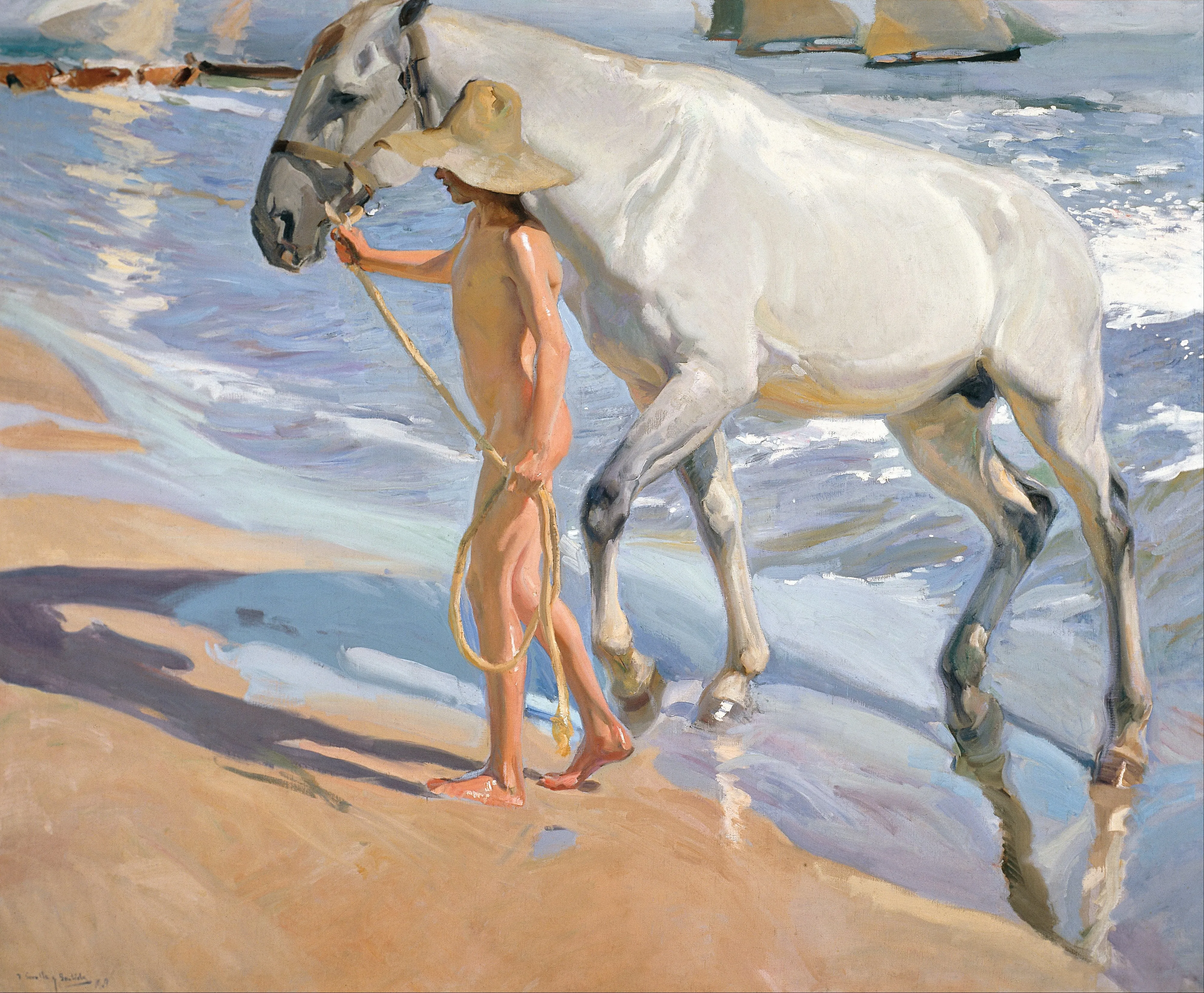
Step into the light.
Wander the full gallery, discover the man behind the brush, and see the photographs of a painter forever chasing the sun.
Enter the Gallery